Power Cut Kit UK (2026)
The government's Be Ready checklist asks for a torch, a radio and a charged power bank. It does not say how much battery three days of phones, a router, a medical device and a fridge-freezer take. This page does, from the makers' own figures.
How much battery do I need?Disclosure: The Jackery, EcoFlow, BLUETTI and Amazon links on this page are affiliate links. We may earn a commission at no extra cost to you. The checklist and the safety advice come from the Cabinet Office, NESO and the Food Standards Agency, linked where quoted; our sizing uses the makers' own power figures.
Quick Answer: What to Keep for a Power Cut
Keep what Be Ready lists: three days of water and food, a torch, a battery or wind-up FM radio, a charged power bank, warm layers, cash, medication and a written list of numbers. Then size the power. Two phones and a lantern need about 49 Wh a day, which a 99 Wh power bank covers for 1.7 days and a 300 Wh station for the full three days. A router and a CPAP machine push a day to about 851 Wh, which is a 1 kWh station's job; a fridge-freezer adds another 1028 Wh a day and wants 2 kWh for three days.
NESO expects supplies to stay secure this winter (a 5.9 GW surplus on 23 October 2026). Most cuts are local faults and storms; report one on 105. This is about coping for three days, not about a national blackout.
What the Be Ready Checklist Asks You to Keep
The Cabinet Office launched Be Ready on 22 October 2026. Its line is that being ready for 3 days helps you manage while support reaches those most in need, that you can build the kit gradually, and that you should set a reminder every six months to check expiry dates. These are its groups and items source:
Water
- Bottled water for 3 days: 3 litres per person per day for drinking. More would be needed for other tasks such as cooking and washing.
Food
- Non-perishable food for 3 days: food with a long shelf life that does not need refrigeration or cooking, such as tinned meat, fish or vegetables, dried fruit and nuts. Buy food you would usually eat.
Hygiene
- Hand sanitiser, wet wipes, hygiene and bathroom products.
Light and warmth
- Torch (and spare batteries).
- Blankets, sleeping bags and warm clothing.
Communication and information
- FM radio (battery or wind-up).
- Charged power bank.
Money and documents
- Cash (a mix of coins and notes) and cards.
- Copies of IDs and documents.
- Important phone numbers and information, such as regular medication and doses.
Medical and health
- First aid kit or first aid items.
- Essential medication and medical supplies.
Baby products
- Baby formula: ready-made or ready-to-feed formula is best, as you may not be able to boil water to make up powdered formula safely.
- Nappies and wipes.
Pet products
- Pet food and bottled water.
Two more things from the campaign page source: write important phone numbers on paper, because you may not be able to look them up; and if anyone in the house relies on powered medical equipment or is otherwise vulnerable, join the Priority Services Register, which is free and, in Be Ready's words, open to lots of households including those with children under 5.
How Likely Is a Power Cut This Winter?
NESO's Winter Outlook 2026/27, published on 23 October 2026, forecasts an operational surplus of 5.9 GW, a 9.5% buffer above its assessment of peak demand, and concludes that electricity supplies are expected to remain secure throughout the winter and within the Government's reliability standards. It says colder spells can tighten margins and that the notices it issues to the market are routine operational tools that do not indicate a risk to supplies source.
The power cuts households actually get are local: a fault or storm damage on the distribution network, repaired by the network operator. That is why you report one on 105 (03457 643643 in Northern Ireland), not to your supplier, and why a kit sized for a day or two covers nearly every cut, with three days as the planning figure Be Ready uses.
How Much Electricity Three Days Takes
Each figure is the maker's own. The daily budget uses Jackery's runtime formula, the only one a maker publishes: 82% of a battery's capacity is usable, and anything plugged into a mains socket also pays the inverter's own draw (15 W on a 1 kWh station). The fridge-freezer figures are Bosch's annual label numbers divided by 365, our arithmetic.
| What you keep running | Maker's figure | In our budget | Wh a day (1 kWh station) |
|---|---|---|---|
| Phone (Samsung Galaxy S25) source | About 15 Wh per full charge (3,885 mAh) | 1 charge a day | 15 Wh |
| LED lantern (Goal Zero Lighthouse 600) source | 19 Wh battery, 5 hours on high per charge | 1 charge a day | 19 Wh |
| Broadband router (BT Smart Hub 2) source | 14.10 W in operation; we budget 8 hours a day, not 24 | 8 hours a day | 233 Wh |
| CPAP machine (ResMed AirSense 11) source | 56.1 W typical, 8 hours a night | 8 hours a day | 569 Wh |
| Fridge-freezer, E-rated (Bosch KGN34NLEAG) source | 244 kWh a year on its label: about 0.67 kWh a day, 28 W averaged over the day | 24 hours a day | 1028 Wh |
| Fridge-freezer, A-rated (Bosch KGN39OCAFG) source | 112 kWh a year on its label: about 0.31 kWh a day, 13 W averaged | 24 hours a day | 667 Wh |
| Electric blanket (Beurer TS 15, double) source | Up to 100 W; 8 hours a night at full | 8 hours a day | 920 Wh |
Three scenarios, three sizes
| Scenario | Wh a day | Three days | 99 Wh power bank | 300 Wh station | 1 kWh station | 2 kWh station |
|---|---|---|---|---|---|---|
| Phones and light | 49 Wh | 0.1 kWh | 1.7 days | 5.0 days | 17.1 days | 34.1 days |
| Phones, light, router and a CPAP machine | 851 Wh | 2.6 kWh | 3 hours | 8 hours | 24 hours | 2.0 days |
| All of that plus an E-rated fridge-freezer | 1879 Wh | 5.6 kWh | 1 hours | 4 hours | 11 hours | 21 hours |
Green means it lasts the three days. The power bank cannot run mains devices at all, so the router, CPAP and fridge rows assume a station. A 300 Wh station runs the router for about 10 hours in total, so ration it; a 1 kWh station runs a CPAP machine for about 12 hours and an E-rated fridge-freezer for about 20 hours on its own.
The Power Bank: Be Ready's Minimum
Airlines cap a power bank at 100 Wh, and the two brands we review both make one at that limit. Either charges two phones for three days with light to spare; neither runs anything with a plug.

Jackery Explorer 100 Plus
A 99 Wh LiFePO4 power bank with two 100 W USB-C ports: six phone charges, and it recharges from a 100 W solar panel in about 2 hours. 965 g, 2,000 cycles, 2-year warranty.
99.2 Wh, 2 × USB-C 100 W, 1 × USB-A 18 W, 965 g, 2,000 cycles to 80%, 2 years (Jackery UK's spec table)
By the formula: 5 charges of a Galaxy S25, or 4 charges of the lantern.

EcoFlow RAPID Pro Power Bank (27,650 mAh)
The same 99 Wh in a laptop-class bank: 300 W over four USB-C outputs with a built-in 140 W cable, and 80% back in 20 minutes from its own charging station. Ternary lithium, 300 cycles to 80% on the spec table.
99.54 Wh, 300 W total, 140 W USB-C, 699 g, 300 cycles to 80%, 2 years (EcoFlow UK's spec table)
By the formula: 5 charges of a Galaxy S25, or 4 charges of the lantern.

Anker Zolo 20,000 mAh power bank (30 W)
The budget pick: 20,000 mAh with a built-in USB-C cable, sold by Anker on Amazon. Enough for a phone for three days; not for a laptop.
20,000 mAh, 30 W, built-in USB-C cable (Anker's Amazon listing)
Amazon prices as of 26 Oct 2026, 05:01 UTC. Product prices and availability are accurate as of the date/time indicated and are subject to change.
Power Stations by Size
A portable power station is a battery with mains sockets: no installation, charged from the wall before the storm, and on the models with a UPS mode it takes over a router or a medical device within 10 to 20 milliseconds of the mains failing. Figures, prices and our verdicts are in the portable power station guide; these are the ones that fit each tier.
About 300 Wh: phones, light and a few hours of router
Enough for the Be Ready basics with a mains socket and USB-C to spare. None of these runs a fridge for long, and only the Jackery passes 300 W of output.

EcoFlow RIVER 3 (245 Wh)
Why here: the cheapest, with a 10 ms UPS on the UPS version for a router or CCTV.
- Router (8 h a day): 1.0 days of budget
- CPAP (8 h a night): 9 hours
- E-rated fridge-freezer alone: 5 hours
- Phone charges: 13 charges

BLUETTI Elite 30 V2 (288 Wh)
Why here: 600 W output and 200 W of solar input in the smallest box.
- Router (8 h a day): 1.2 days of budget
- CPAP (8 h a night): 11 hours
- E-rated fridge-freezer alone: 6 hours
- Phone charges: 15 charges

Jackery Explorer 500 v2 (512 Wh)
Why here: 512 Wh for about £100 more: the router for two days.
- Router (8 h a day): 2.2 days of budget
- CPAP (8 h a night): 19 hours
- E-rated fridge-freezer alone: 11 hours
- Phone charges: 27 charges
About 1 kWh: a full three days of basics, or one day with a fridge-freezer
The size most households should look at. All four run a fridge-freezer, a CPAP machine and a router at the same time; the difference is how long, and whether you can add a battery later.

Anker SOLIX C1000 Gen 2 (1,024 Wh)
Why here: 2,000 W output and a 49-minute recharge at the lowest price on Amazon.
- Router (8 h a day): 3.6 days of budget
- CPAP (8 h a night): 1.5 days
- E-rated fridge-freezer alone: 20 hours
- Phone charges: 55 charges

BLUETTI Elite 100 V2 (1,024 Wh)
Why here: 1,000 W of solar input and a 10 ms UPS for £499.
- Router (8 h a day): 3.6 days of budget
- CPAP (8 h a night): 1.5 days
- E-rated fridge-freezer alone: 20 hours
- Phone charges: 55 charges

EcoFlow DELTA 3 Plus (1,024 Wh)
Why here: expands to 5 kWh with extra batteries if cuts get longer.
- Router (8 h a day): 3.6 days of budget
- CPAP (8 h a night): 1.5 days
- E-rated fridge-freezer alone: 20 hours
- Phone charges: 55 charges

Jackery Explorer 1000 v2 (1,070 Wh)
Why here: the lightest 1 kWh at 10.8 kg, with Jackery's UK support.
- Router (8 h a day): 3.8 days of budget
- CPAP (8 h a night): 1.5 days
- E-rated fridge-freezer alone: 20 hours
- Phone charges: 58 charges
About 2 kWh: the fridge-freezer for two to three days
For a household that wants the freezer kept frozen through a long cut, or a medical device plus everything else without rationing.

BLUETTI Elite 200 V2 (2,073.6 Wh)
Why here: 2,600 W output and 1,000 W of solar input; cannot be expanded.
- Router (8 h a day): 7.3 days of budget
- CPAP (8 h a night): 3.0 days
- E-rated fridge-freezer alone: 40 hours
- Phone charges: 112 charges

Jackery Explorer 2000 Plus v2 (2,048 Wh)
Why here: 5 kg lighter and expandable to 12 kWh.
- Router (8 h a day): 7.2 days of budget
- CPAP (8 h a night): 3.0 days
- E-rated fridge-freezer alone: 39 hours
- Phone charges: 111 charges
Direct prices checked 26 Oct 2026; the retailer's price at checkout applies. Runtimes are estimates from Jackery's formula applied to every brand.
Light, Radio, Batteries, a Thermometer and a Generator
The rest of Be Ready's power-related list, plus the thermometer the Food Standards Agency advice implies and the generator for anyone whose cuts last days. Torches are safer than candles, in the campaign's words.

Energizer Vision HD+ 360-lumen head torch
Hands free, runs on AAA batteries you can stock.
360 lumens, AAA batteries (Energizer's listing)

Lepro 1,000-lumen rechargeable camping lantern
Room light from a USB-rechargeable lantern that doubles as a small power bank.
1,000 lumens, 4,400 mAh, USB rechargeable (Lepro's listing)
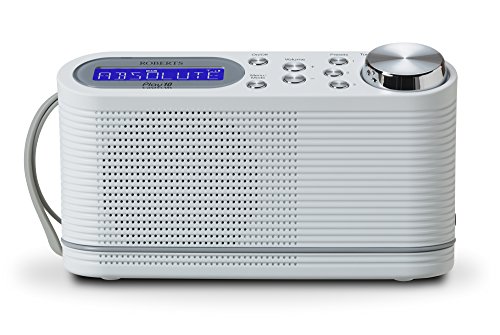
Roberts PLAY10 FM/DAB portable radio
A battery FM radio, as Be Ready asks; write your local station frequencies on it.
FM, DAB and DAB+, runs on 4 AA batteries or mains (Roberts' listing)

Duracell Plus AA batteries, 24 pack
Spares for the torch and radio; check the date every six months with the rest of the kit.
24 × AA alkaline
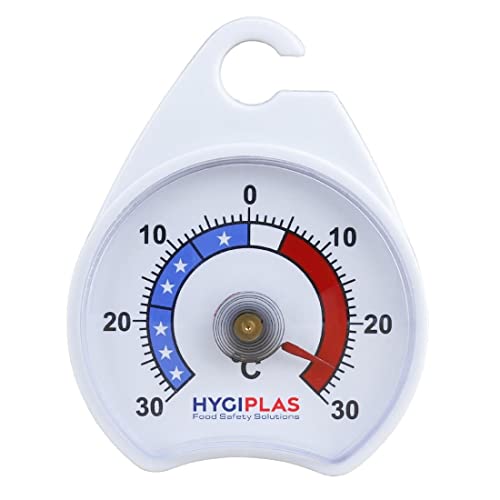
Hygiplas fridge-freezer dial thermometer
Tells you whether the fridge has passed the FSA's 8°C line after a cut.
−30°C to 30°C dial

Hyundai 2.0 kW petrol inverter generator
For cuts that outlast any battery: 1.8 kW continuous, pure sine wave, 62 dB. Outdoors only, never in a garage or near an open window.
2.0 kW peak, 1.8 kW continuous, pure sine wave, 62 dBA (Hyundai's listing)
Amazon prices as of 26 Oct 2026, 05:01 UTC. Product prices and availability are accurate as of the date/time indicated and are subject to change.
Fridge and Freezer: What the FSA Says
- A cut under 4 hours is unlikely to affect food in a fridge or freezer, as long as the doors stay shut.
- A fridge stays cold for about 4 hours. Once it reaches 8°C, food that needs chilling should be eaten or discarded within 4 hours.
- A full freezer holds for about 48 hours, a half-full one about 24. These are estimates and depend on the appliance.
- A fridge thermometer tells you which side of 8°C you are on source.
So a station only needs to run the fridge-freezer if the cut passes the first few hours. Plug it in then, not at the start, and the battery goes further.
Heating, Medical Devices and Two Safety Rules
Heating stops too
A gas or oil boiler needs mains electricity for its controls and pump, so the heating goes off with the lights. Be Ready's words: homes can become cold very quickly when the heating goes off. Blankets, sleeping bags and layers first; an electric blanket at up to 100 W warms a person for about 7 hours per kilowatt-hour, which heating a room cannot match.
Medical devices
Join the Priority Services Register, keep written instructions for the equipment, and size the battery on the maker's figure: the ResMed AirSense 11 draws 56.1 W typical, about 450 Wh a night, so a 1 kWh station covers one night with margin and a 2 kWh station three. Be Ready also says to request repeat prescriptions up to 5 working days before you need them.
Never run a generator indoors
Petrol and diesel exhaust contains carbon monoxide. A generator runs outdoors, away from windows, doors and vents, never in a garage or shed with the door open. The same goes for camping stoves and barbecues used for heat.
Do not back-feed the house
A power station plugs into the appliances, not into a wall socket. Feeding a house circuit from a station or generator needs a changeover switch fitted by an electrician; without one it can energise the street's cables and endanger the people repairing them.
Can Solar Recharge the Kit in a Winter Cut?
Slowly. PVGIS 5.3 gives a 100 W panel facing south at its best tilt these daily averages, with 14% system losses source:
| 100 W panel | June | December | January |
|---|---|---|---|
| Exeter | 410 Wh/day | 120 Wh/day | 140 Wh/day |
| Birmingham | 380 Wh/day | 110 Wh/day | 130 Wh/day |
| Inverness | 350 Wh/day | 50 Wh/day | 60 Wh/day |
| Birmingham, panel flat on the ground | 400 Wh/day | 40 Wh/day | 50 Wh/day |
A 200 W folding panel in Birmingham in December puts back about 220 Wh on an average day: the router budget, or a few phone charges. Worth having for a cut that lasts days; not a reason to buy a smaller battery. Which panels fit which station is in our portable solar panels guide.
Frequently Asked Questions
Frequently Asked Questions
Sources
- Be Ready checklist (Cabinet Office, October 2026, PDF)
- Be ready for emergencies, GOV.UK Be Ready campaign
- NESO: Britain's electricity supplies expected to remain secure this winter (23 October 2026)
- Food Standards Agency: food safety in a power cut
- Priority Services Register (thepsr.co.uk)
- BT Smart Hub 2 power consumption information (BT, PDF)
- Bosch KGN34NLEAG fridge-freezer product page, Bosch UK (244 kWh a year)
- Bosch KGN39OCAFG fridge-freezer product page, Bosch UK (112 kWh a year)
- ResMed AirSense 11 user guide (56.1 W typical)
- Samsung Galaxy S25 specifications (3,885 mAh)
- Goal Zero Lighthouse 600 lantern (19 Wh, 5 hours on high)
- Beurer TS 15 electric blanket manual (up to 100 W)
Read on 26 October 2026. Product figures are from the makers' UK pages, linked on each card.