Best Portable Power Stations UK (2026)
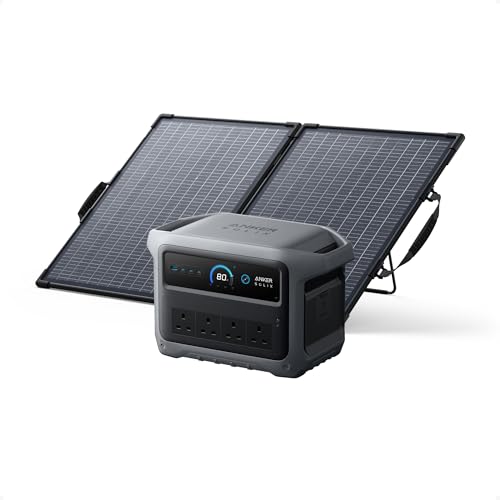
Our top pick for 2026 is the Anker SOLIX C1000 Gen 2: the most output and fastest recharge in its class. Below: the top portable power stations and solar generators for camping, van life and power-cut backup, ranked on capacity, output and value.
Want whole-home backup instead? See installed home batteries ↓
See the ComparisonDisclosure: This page contains affiliate links. We may earn a commission at no extra cost to you. All rankings and opinions are our own and based on independent research — we rank on merit, not commission.
Quick Answer: Which Portable Power Station Should You Buy?
For most people the best portable power station in the UK is the Anker SOLIX C1000 Gen 2: 1,024 Wh, 2,000 W output, a 49-minute recharge, and more output than the Jackery (2,000 W vs 1,500 W). For solar charging, the BLUETTI Elite 100 V2 takes 1,000 W of solar input, the most here along with the EcoFlow. Choose the Jackery Explorer 1000 v2 if you want the lightest unit with the best app and UK support, or the EcoFlow DELTA 3 Plus if you want to expand capacity later (1 kWh up to 5 kWh).
All four are 1 kWh-class stations for camping, van life and short power-cut backup — quiet, fume-free LiFePO4 units that recharge from the mains, a car, or a solar panel. They are not a substitute for installed home battery storage if you want to cut your bill or back up the whole house. For solar panels that cut your bill without an installer, see plug-in solar kits.


How We Compared These
We compared portable power stations sold in the UK on six things that actually matter: usable capacity (Wh), continuous AC output (W), recharge speed, weight, battery chemistry and price per usable watt-hour. We only include units with LiFePO4 cells (safer and longer-lived than NMC), genuine UK availability and warranty, and owner reviews for the model or the model it replaced. Amazon prices come from Amazon and update twice a day; Jackery, BLUETTI, EcoFlow and Renogy prices come from their own UK stores and update twice a day (last checked 12 Oct 2026).
Prices are indicative and move with frequent promotions — each is dated, and the retailer's price at checkout is what applies. Jump to the comparison table.
200–2,000 Wh
Capacity Range
Plug-and-play
300–2,000 W
Output
No install
<1–2 hrs
Recharge
From the mains
LiFePO4
Chemistry
~3,000–4,000 cycles
Portable Power Station Comparison Table
| Model | Capacity | AC Output | Recharge | Weight | Price | Buy |
|---|---|---|---|---|---|---|
| Anker SOLIX C1000 Gen 2 | 1,024 Wh | 2,000 W (3,000 W peak) | Full charge in 49 min (HyperFlash, enabled in the app) | 11.3 kg | £598.00with a 100 W solar panel | Amazon |
| BLUETTI Elite 100 V2 | 1,024 Wh | 1,800 W | 80% in 45 min (AC); full in ~70 min from 1,000 W of solar | 11.5 kg | £599 direct | BLUETTI |
| Jackery Explorer 1000 v2 | 1,070 Wh | 1,500 W | ~1 hr emergency fast charge / ~2 hr standard | 10.8 kg | £398 direct | Jackery |
| EcoFlow DELTA 3 Plus | 1,024 Wh | 1,800 W (3,600 W peak) | Full in 56 min (AC); full in 70 min from 1,000 W of solar | 12.5 kg | £699 direct | EcoFlow |
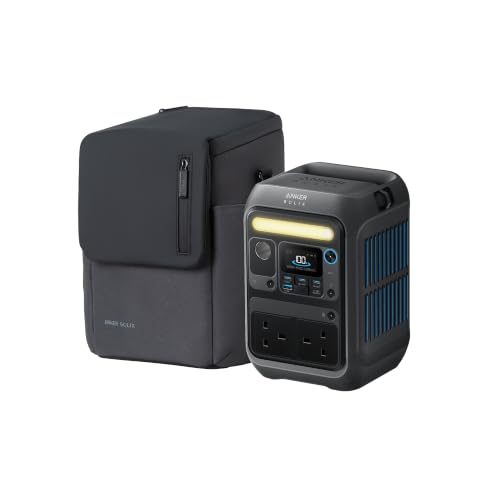
| Anker SOLIX C300X | 288 Wh | 300 W (600 W peak) | 80% in 50 min from the mains; two-way 140 W USB-C | 4.13 kg | £213.00 | Amazon |
Jackery, BLUETTI, EcoFlow and Renogy prices come from their own UK stores and update twice a day (last checked 12 Oct 2026). The retailer's price at checkout applies.
Amazon prices as of 12 Oct 2026, 23:39 UTC. Product prices and availability are accurate as of the date/time indicated and are subject to change.
Detailed Reviews
Anker SOLIX C1000 Gen 2
Best overall: most output and fastest recharge in its class
Capacity
1,024 Wh
AC Output
2,000 W
Recharge
Full charge in 49 min (HyperFlash, enabled in the app)
Weight
11.3 kg
Pros
- 2,000 W continuous (3,000 W peak): runs a kettle, microwave or power tools
- Full recharge from the mains in 49 minutes
- LiFePO4 cells rated for 4,000 cycles to 80% capacity, 5-year warranty
- Under 10 ms UPS switchover for a router, CPAP or PC
- More output than the Jackery Explorer 1000 v2 (2,000 W vs 1,500 W)
Cons
- Slightly heavier than the Jackery (11.3 kg vs 10.8 kg)
- The 49-minute charge has to be switched on in the Anker app
BLUETTI Elite 100 V2
Best solar generator: 1,000 W solar input, sold with a panel
Capacity
1,024 Wh
AC Output
1,800 W
Recharge
80% in 45 min (AC); full in ~70 min from 1,000 W of solar
Weight
11.5 kg
Pros
- Sold direct with a 100 W solar panel included
- 1,000 W solar input, the most here along with the EcoFlow: a full charge in about 70 minutes with enough panels
- 80% recharge from the mains in 45 minutes
- 10 ms UPS switchover for a router, CPAP or PC
- LiFePO4 cells rated for 4,000+ cycles
Cons
- Sold direct in the UK only (bluettipower.co.uk), not on Amazon
- 1,800 W output, below the Anker’s 2,000 W
Jackery Explorer 1000 v2
Best premium pick — lightest, best app & UK support
Capacity
1,070 Wh
AC Output
1,500 W
Recharge
~1 hr emergency fast charge / ~2 hr standard
Weight
10.8 kg
Pros
- Lightest in its class at 10.8 kg — genuinely easy to carry
- One-hour emergency fast charge
- 4,000-cycle LiFePO4; 3-year warranty, extendable to 5
- Best-in-class app, quiet running and UK after-sales support
- Wide range of solar-generator bundles direct from Jackery
Cons
- The price swings with Jackery’s sales (list price £899): check it on the day
- 1,500 W output is lower than the Anker (2,000 W) and EcoFlow (1,800 W)
- 400 W solar input, the lowest of the 1 kWh stations here
EcoFlow DELTA 3 Plus
Best for expandable capacity
Capacity
1,024 Wh
AC Output
1,800 W
Recharge
Full in 56 min (AC); full in 70 min from 1,000 W of solar
Weight
12.5 kg
Pros
- Expandable from 1 kWh to 5 kWh with EcoFlow extra batteries (DELTA 3, DELTA Pro 3, DELTA 2 and DELTA 2 Max)
- 1,800 W output, with X-Boost for devices up to 2,400 W
- Full recharge from the mains in 56 minutes
- 1,000 W solar input (2 × 500 W): a full charge in 70 minutes
- Under 10 ms UPS switchover, 4,000 cycles to 80% capacity, 5-year warranty
Cons
- The heaviest here at 12.5 kg
- Expansion batteries add up quickly
Anker SOLIX C300X
Best compact — weekend camping & devices
Capacity
288 Wh
AC Output
300 W
Recharge
80% in 50 min from the mains; two-way 140 W USB-C
Weight
4.13 kg
Pros
- 288 Wh in a genuinely carry-anywhere size
- Runs a small fridge for ~4 hr or charges a laptop ~5 times
- LiFePO4 chemistry at an accessible price
Cons
- 300 W output won’t run high-wattage appliances
- Too small for a full day off-grid
- Replaced the C300 in 2026, so few UK owner reviews yet
Best Solar Generators (Power Station + Panel)
A “solar generator” is just a portable power station bundled with foldable solar panels, so you can recharge for free in daylight — ideal for multi-day camping, van life or off-grid backup. You can buy the station and panels separately, or get a matched bundle.
Jackery effectively created this category and sells the widest range of matched solar generator bundles in the UK — station plus SolarSaga panels, sized from 300 Wh up to 3,000 Wh. See Jackery solar generator bundles.
If you'll lean on solar, the BLUETTI Elite 100 V2 takes up to 1,000 W of panels (Jackery's 1000 v2 takes 400 W): a full charge in about 70 minutes from 1,000 W of panels. BLUETTI sells it direct with a 100 W panel, or with bigger panel bundles. See BLUETTI solar generator kits.
Already have a station? Renogy's Lightweight Portable Solar Suitcase comes in 100 W, 220 W, 300 W and 400 W, from £119.99 direct (12 Oct 2026). Renogy says it works with most portable power stations. Check two things before you buy: that the plug matches your station (or an adapter is available), and that the panel's voltage sits inside your station's solar input range (the 100 W panel's open-circuit voltage is 21.6 V). See Renogy portable solar suitcases.
Foldable & portable solar panels
Pair any of the power stations above with a foldable panel to make a solar generator. These fold flat, weigh 4–9 kg, and connect to most stations via the included adapters.
As an Amazon Associate we earn from qualifying purchases. We also work with the Awin affiliate network.
Amazon prices as of 12 Oct 2026, 23:39 UTC. Product prices and availability are accurate as of the date/time indicated and are subject to change.

DOKIO
Dokio 2 PC Solar Panel 100 W 12 V Monocrystalline Photovoltaic System for Camper Home Cabin
2×100W rigid mono panels. Best-reviewed budget pair — shed, caravan, off-grid kit.

Renogy
Renogy Solar Panel 200W, 12 V Monocrystalline Solar Panel PV Panel Off Grid Solar Power for Motorhome, Shed, Campervan Caravan and Boat Compact Design
Single 200W rigid mono. The "one panel" upgrade for a 12V leisure system.

Renogy
Renogy EFLEX-CORE 200W Portable Solar Panel, IP65 Waterproof Foldable Solar Panel Power Backup, Solar Charger for Power Station RV Camping Off Grid
200W foldable portable. Pairs natively with the Renogy power stations.

ALLPOWERS
ALLPOWERS SE200 200W Portable Solar Panel for S2000 PRO R600 R1500 LITE R2500 V2 R4000 Power Station, Foldable Monocrystalline Solar Cell Solar Charger Solar Kit for RV Van Outdoor Off-Grid
200W portable foldable. Compatible with ALLPOWERS / EcoFlow / Jackery via included adapters.
Just charging phones, lights and a laptop? You don't need a 1 kWh station. The compact Anker SOLIX C300X (288 Wh) above is enough for a weekend. The BLUETTI Elite 30 V2 has the same 288 Wh with 600 W output for £199 direct (12 Oct 2026). A pocket DC power bank station like the Anker C200 (192 Wh) covers devices on shorter trips.
How to Choose a Portable Power Station
1. Size it by what you'll run
Add up the watts of what you need at once (output, W) and how long (capacity, Wh). Phones and laptops: 200–300 Wh is plenty. A fridge, lights and devices through an outage: a 1 kWh / 1,800 W station. Power tools or a kettle: you need the full 1,800 W class.
2. Insist on LiFePO4
Every station here uses LiFePO4 cells — ~3,000–4,000 cycles, safer and more heat-tolerant than the cheaper NMC chemistry. It is the single most important spec for lifespan and safety.
3. Weight vs power
1 kWh stations weigh 11–12.5 kg. If you'll carry it far, the 10.8 kg Jackery is the lightest. If it lives in a van or shed, weight matters less and the more powerful Anker wins.
4. Add solar if you go long
For trips longer than a day or two, a foldable solar panel turns any station into a self-recharging solar generator — no mains, no fuel.
Frequently Asked Questions
Frequently Asked Questions
Related Guides
Best Home Batteries UK
Installed whole-home storage — Powerwall, Sunsynk & more
Best Solar Panels UK
Rooftop solar PV compared for 2026
Best Lithium Leisure Batteries UK
Wired-in 12V storage for campervans, motorhomes and caravans
Battery Storage Land Leases
Own land near a substation? What storage developers pay per acre
Plug-In Solar Panels UK
Panels that plug into a wall socket: the rules and legal kits
Need Whole-Home Backup, Not a Portable?
Portable stations are for camping and short outages. If you want to power your whole house during a blackout or cut your electricity bill, you need installed battery storage. See our independent home battery comparison.
Compare Home Batteries