Best Home & Solar Batteries UK (2026)
Our top pick for 2026 is the Tesla Powerwall 3 (£7,400–£11,000 installed): integrated solar inverter, 13.5 kWh, and whole-home backup. Below: 7 home and solar batteries ranked, with installed prices and a free savings calculator.
Pairing a battery with solar panels? Jump to our solar-pairing picks ↓
See the ComparisonDisclosure: This page contains affiliate links. We may earn a commission at no extra cost to you. All opinions are our own and based on independent research.
How We Compared These Batteries
We compared widely installed UK home batteries on seven criteria: installed price, £/kWh value, warranty length, cycle life, inverter compatibility, UK installer availability, and features (backup, smart-tariff integration, solar coupling). Capacity figures are usable kWh, not nameplate. Installed prices combine UK retailer prices for the battery and any inverter it needs with installers' published installed prices and installation costs, checked 23 September 2026. Your own quote depends on your property and installer. The ranking follows our overall rating across those criteria; where two batteries score the same, the lower £/kWh ranks higher.
We exclude batteries without UK warranty support, batteries whose manufacturer has stopped trading, and any product without a published UK price. GivEnergy was removed after the company entered administration in April 2026 (see the FAQ). Jump to the comparison table.
Quick Answer: Which Battery Should You Buy?
Best Overall
Tesla Powerwall 3 — £548–£815/kWh
Lowest Installed Price
Sunsynk 5.12 kWh: from £3,700 installed
Lowest £/kWh
Fox ESS EP12 11.52 kWh: £424–£554/kWh
£3,500–£11,000
Typical Cost
Fully installed
8–13 years
Payback Period
On 2026 tariffs
70–80%
Self-Consumption
With solar + battery
10–12 years
Warranty
Industry standard
See your exact savings first
Free calculator: annual savings, payback period, and recommended battery size in 30 seconds.
Home Battery Comparison Table
| Battery | Capacity | Cost (Installed) | £/kWh | Warranty | Rating | Best For |
|---|---|---|---|---|---|---|
| Tesla Powerwall 3 | 13.5 kWh | £7,400–£11,000 | £548–£815 | 10 years (80% capacity retention) | 4.5 | Best overall — integrated inverter, large capacity, whole-home backup |
| Fox ESS EP12 11.52 kWh | 10.37 kWh usable (11.52 kWh nominal, 1 x EP12) | £4,400–£5,750 | £424–£554 | 10 years (70% capacity retention or 43.19 MWh throughput) | 4.4 | Best value per kWh: 10.4 kWh usable in one wall-mounted battery |
| Sigenergy SigenStor 9 kWh | 8.76 kWh usable (9.04 kWh nominal, 1 x BAT 10.0) | £5,700–£7,000 | £651–£799 | 10 years (60% capacity retention or 30.66 MWh throughput) | 4.4 | Best all-in-one: solar inverter, battery and optional DC EV charger in one stack |
| Sunsynk 5.12 kWh | 5.12 kWh | £3,700–£4,300 | £723–£840 | 5 years product, 10 years performance | 4.4 | Best installer favourite — flexible and competitively priced |
| Myenergi Libbi 5 kWh | 5 kWh | £4,250–£5,550 | £850–£1,110 | 10 years (battery + inverter) | 4.3 | Best for Myenergi ecosystem (Zappi + Eddi users) |
| BYD Battery-Box HVS 5.1 | 5.12 kWh | £5,000–£7,500 | £977–£1,465 | 10 years | 4.3 | Best premium — commercial-grade chemistry, wide inverter choice |
| EcoFlow Delta Pro Ultra | 6 kWh per battery (up to 30 kWh stacked) | £4,299–£4,498 | £717–£750 (per single battery RRP) | 5 years | 4 | Best portable — plug-and-play, no installation, renter-friendly |
Not sure which battery suits your home?
Tell us your postcode and energy setup — we'll email you a personalised pick.
Detailed Reviews
Tesla Powerwall 3
Best overall — integrated inverter, large capacity, whole-home backup
£7,400–£11,000
Capacity
13.5 kWh
Cost/kWh
£548–£815
Warranty
10 years (80% capacity retention)
Phases
Single or three phase
Pros
- 13.5 kWh in a single unit — no stacking needed
- Integrated DC-coupled solar inverter (no separate hybrid inverter needed)
- 11.04 kW continuous output: runs almost anything in the home
- Seamless whole-home backup during outages
- Tesla app with Storm Watch and energy forecasting
Cons
- Highest upfront cost in this lineup
- Must use a Tesla-certified installer (limited installer pool)
- Long lead times in the UK (typically 4–8 weeks)
Fox ESS EP12 11.52 kWh
Best value per kWh: 10.4 kWh usable in one wall-mounted battery
£4,400–£5,750
Capacity
10.37 kWh usable (11.52 kWh nominal, 1 x EP12)
Cost/kWh
£424–£554
Warranty
10 years (70% capacity retention or 43.19 MWh throughput)
Phases
Single phase (H1-G2); three phase via Fox H3 inverters
Pros
- Lowest installed cost per usable kWh in this lineup
- 10.37 kWh usable in a single battery only 185 mm deep, wall or floor mounted
- IP65 with built-in battery heating and fire suppression, so it can be installed outdoors
- Scales to 46.08 kWh with four units in parallel (junction box required)
- Works with Kraken smart tariffs, the Axle virtual power plant and Capture AI
Cons
- 90% depth of discharge: 10.37 kWh usable from 11.52 kWh nominal
- Built-in backup covers selected circuits only: whole-home backup needs the EPS-BOX SP (about £486 ex VAT extra)
- 10-year warranty applies on registration; ITS says the H1-G2 inverter reverts to 5 years if the install is not registered with Fox
Sigenergy SigenStor 9 kWh
Best all-in-one: solar inverter, battery and optional DC EV charger in one stack
£5,700–£7,000
Capacity
8.76 kWh usable (9.04 kWh nominal, 1 x BAT 10.0)
Cost/kWh
£651–£799
Warranty
10 years (60% capacity retention or 30.66 MWh throughput)
Phases
Single phase (EC SP 3–12 kW) or three phase (EC TP 5–30 kW)
Pros
- Solar inverter, battery inverter, battery and energy management in one stack, with an optional 12.5 or 25 kW DC EV charger module
- 100% depth of discharge: 8.76 kWh usable from a 9.04 kWh module
- Modular: 1 to 6 modules per controller (up to ~54 kWh), and new modules can be mixed with older ones
- IP66: indoor or outdoor, floor or wall mounted (wall mount takes up to 2 modules)
- mySigen app schedules charging automatically, with Octopus Agile integration
Cons
- Warranty guarantees only 60% of usable capacity at 10 years (or 30.66 MWh, about 3,500 full cycles), and drops to 5 years if the system is offline for more than a year in total
- One 10.0 module charges and discharges at up to 4.6 kW, below the controller's rating: full power needs two or more modules
- Whole-home backup needs the Sigen Gateway, which costs extra (£713–£895 ex VAT hardware)
Sunsynk 5.12 kWh
Best installer favourite — flexible and competitively priced
£3,700–£4,300
Capacity
5.12 kWh
Cost/kWh
£723–£840
Warranty
5 years product, 10 years performance
Phases
Single or three phase (via compatible inverter)
Pros
- Lowest installed price in this lineup for a 5 kWh system
- Widely supported by UK installers
- Three-phase hybrid inverter option available
- Modular up to 15.36 kWh
- Capable monitoring platform
Cons
- Warranty split (5 yr product / 10 yr performance) per UK retailers, although Sunsynk now states 10 years: check the installer's paperwork
- The ECCO 5 kW inverter it was usually paired with was discontinued in June 2026 (the ACURE 5 kW replaces it)
- Brand less well-known to UK homeowners
- Customer support routed through installer, not direct
Myenergi Libbi 5 kWh
Best for Myenergi ecosystem (Zappi + Eddi users)
£4,250–£5,550
Capacity
5 kWh
Cost/kWh
£850–£1,110
Warranty
10 years (battery + inverter)
Phases
Single phase
Pros
- Seamless integration with Zappi EV charger and Eddi diverter
- UK designed and manufactured
- Smart energy management across home devices
- Modular — stack 5/10/15/20 kWh
- Green energy matching feature
Cons
- Premium price per kWh for the smallest 5 kWh config
- Best value only if you already have Myenergi products
- Must be installed by Myenergi-approved installer or warranty voids
BYD Battery-Box HVS 5.1
Best premium — commercial-grade chemistry, wide inverter choice
£5,000–£7,500
Capacity
5.12 kWh
Cost/kWh
£977–£1,465
Warranty
10 years
Phases
Single or three phase (via compatible inverter)
Pros
- Cobalt-free LFP chemistry — among the safest battery types
- Modular tower design — expand 5.1 → 12.8 kWh per stack, up to 38.4 kWh parallel
- Compatible with SMA, Fronius, GoodWe, Kostal, SolarEdge, Sungrow inverters
- Excellent cycle life (6,000+ cycles)
- Strong commercial and residential track record
Cons
- Requires a separate hybrid inverter (not all-in-one)
- Premium installed price for the entry 5 kWh size
- Tower design takes more floor space than wall-mount alternatives
EcoFlow Delta Pro Ultra
Best portable — plug-and-play, no installation, renter-friendly
£4,299–£4,498
Capacity
6 kWh per battery (up to 30 kWh stacked)
Cost/kWh
£717–£750 (per single battery RRP)
Warranty
5 years
Phases
Single phase 230V
Pros
- No installation required — plug into wall socket
- Portable — can be moved between properties
- Works without solar (charge from grid at off-peak rates)
- 6900 W continuous output with multiple outlets
- Practical for renters who cannot modify the property
Cons
- Higher cost per kWh than installed systems
- 5-year warranty (shorter than installed rivals)
- Not a true whole-home solution at single-battery scale
- Less efficient than hardwired systems
- Sold out at EcoFlow UK and the UK retailers we checked (September 2026)
Get a Free Battery Recommendation
Tell us about your home and we'll email you a personalised recommendation — no spam, no hard sell.
How to Choose the Right Battery for Your Home
Choosing a home battery depends on four factors: your budget, whether you have solar panels, your electricity usage, and your property type.
If you have solar panels
A 10–13 kWh battery pairs well with a 4–6 kW solar system. It stores excess daytime generation for evening use, boosting self-consumption from ~35% to ~75%.
Our pick: Tesla Powerwall 3
If you don't have solar
Use a battery for tariff arbitrage: charge at about 8–10p/kWh overnight on a smart tariff and use it through the day instead of paying the day rate. The Fox ESS EP12 gives the most usable storage per pound. Renters can use the EcoFlow Delta Pro Ultra with no installation, but its main unit is sold out in the UK.
Our pick: Fox ESS EP12
If you want maximum capacity
The Tesla Powerwall 3 offers 13.5kWh in a single unit — enough for large homes, EV owners, or those wanting full backup power during outages.
Our pick: Tesla Powerwall 3
If you're on a budget
The Sunsynk 5.12 kWh is the cheapest installed system here at £3,700–£4,300. For more capacity per pound, the Fox ESS EP12 costs £4,400–£5,750 installed for 10.4 kWh usable and scales to 46 kWh later.
Our pick: Sunsynk 5.12 kWh
Best Solar Batteries UK: Which to Pair With Panels
If you already have solar panels, or you're installing them alongside a battery, four of the batteries above are purpose-built for solar pairing. Each captures excess daytime generation and discharges through your evening peak, lifting self-consumption from ~35% to 75-80%.
DC-coupled, single unit
Tesla Powerwall 3
Built-in solar inverter (up to 20 kW PV input) and backup gateway. Best for new solar+battery installs from scratch.
All-in-one stack
Sigenergy SigenStor
Solar inverter, battery and an optional DC EV charger in one stack, from one to six battery modules. Best for a new solar and battery install where an EV charger may come later.
All-in-one hybrid
Myenergi Libbi
UK-made modular battery with integrated hybrid inverter and 10-year warranty. Pairs natively with Zappi and Eddi. Best for solar systems in the 4-6 kW range.
AC-coupled retrofit
Sunsynk 5.12 kWh
Retrofits to any existing solar system without replacing your inverter. Lowest installed price here for solar owners adding storage later.
Pairing a battery with solar takes self-consumption from ~35% to 75-80%, saving an extra £400-£700/year on top of solar-only savings. See our best solar panels guide if you haven't installed panels yet, or our savings calculator to model your specific setup.
Home Battery Costs Breakdown (2026)
| Cost Component | 5kWh System | 10kWh System | 13.5kWh System |
|---|---|---|---|
| Battery unit | £1,300–£2,000 | £3,000–£4,500 | £5,500–£7,500 |
| Inverter (if needed) | £900–£1,400 | £1,200–£1,800 | Included (Powerwall / All-in-One) |
| Installation labour | £700–£1,000 | £900–£1,500 | £1,200–£2,000 |
| Electrical work & DNO | £300–£500 | £400–£700 | £500–£800 |
| Total installed | £3,500–£5,500 | £5,500–£8,000 | £7,400–£11,000 |
| Annual savings (est.) | £200–£450 | £400–£650 | £550–£800 |
| Payback period | 12–18 years | 10–15 years | 10–15 years |
Indicative ranges by system size. Product-specific prices are in the comparison table above (checked 23 September 2026). VAT at 0%: home battery storage is zero-rated until March 2027.
Plug-and-play alternatives (no install)
If those installed prices are too much right now (for renters, sheds, or outage-only backup), these portable LiFePO4 stations ship today and need no electrician.
As an Amazon Associate we earn from qualifying purchases. We also work with the Awin affiliate network.
Amazon prices as of 10 Oct 2026, 20:36 UTC. Product prices and availability are accurate as of the date/time indicated and are subject to change.

Anker
Anker SOLIX C200 DC Power Bank Station, 192Wh Portable Power Station, LiFePO4 Battery, 200W Solar Generator, for Outdoor Camping, Traveling, and Emergencies (No Wall Adapter Included)
Pocket-size 192Wh. Phone, laptop, lights — entry-level emergency backup.

Anker
Anker SOLIX C1000 Gen 2 with AC charging cable, 2000W 1024Wh Power Station
1024Wh / 2000W, 49-min recharge. Runs a fridge, kettle or power tools through an outage.
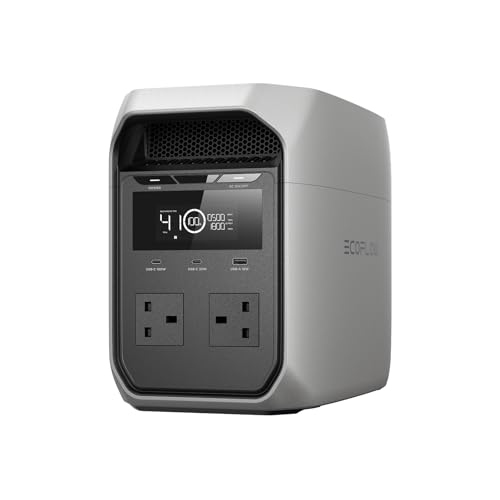
EF ECOFLOW
EF ECOFLOW DELTA 3 Classic Portable Power Station, 1024Wh LiFePO4 Battery
1024Wh / 1800W, 0–80% in 45 min from the mains. 10 ms switchover for a router or PC.

Jackery
Jackery Explorer 1000 v2 Portable Power Station, 1070Wh LiFePO4 Solar Generator, 1500W AC/100W USB-C Output, 1 Hour Quick Charge, LFP Power Station for Outdoor Camping, Motorhome, Emergency
1070Wh LiFePO4. Lighter than the Anker C1000 Gen 2, with less output (1500W vs 2000W).
Comparing these properly? See our best portable power stations UK guide — Anker, BLUETTI, Jackery and EcoFlow ranked, plus solar generators for camping and backup.
Looking at balcony solar with a battery? In the UK a kit with a built-in battery can't be sold as plug-in solar; it has to be hardwired. See the plug-in solar rules and legal kits.
Important: Grid Connection Requirements
Most home batteries exceed the 3.68kW threshold, which means they need a G99 grid connection application through your local DNO. Your installer handles this, but it adds 45–65 working days to the timeline.
G98 vs G99: What you need to knowOwn Land? Field-Scale Battery Storage Pays £10,000–£40,000 Per Acre
Home batteries save money; grid-scale batteries earn it. If you own 2+ acres near a substation, storage developers currently pay £10,000–£40,000 per acre per year to lease land: 10–25x solar farm rates.
Frequently Asked Questions
Frequently Asked Questions
Related Guides
G98 vs G99 Grid Connection
Which application does your battery need?
Battery Storage vs Solar Farm
How grid-scale BESS compares to home batteries
Battery Savings Calculator
See exactly how much you could save
Battery Demand Hits Record High
What's driving the 2026 home battery boom
Plug-In Solar Panels UK
The 800 W rules and every kit on the ENA register
Not Sure Which Battery to Choose?
Try our free calculator to see how much you could save based on your electricity bill and whether you have solar panels.
Calculate Your Savings